Bottled in Bond Whiskey: What the Label Means
- Bottled in Bond Is a Six-Part Production Promise
- The Bottled-in-Bond Requirements, in Plain English
- What Does One Distilling Season Mean?
- How to Read the Distillery and Bottling Information
- Bottled in Bond Versus Straight Whiskey
- Does Bottled in Bond Require an Age Statement?
- Can Imported Spirits Say Bottled in Bond?
- Why Is It Called Bottled in Bond?
- What Bottled in Bond Does Not Guarantee
- Sources
Bottled in Bond Is a Six-Part Production Promise
Bottled-in-bond whiskey must be the same kind of spirit, made from the same class of materials by one distiller at one distillery in one distilling season, stored for at least four years, altered only through limited physical treatments, reduced only with pure water, and bottled at exactly 100 proof (50% alcohol by volume). It is a regulated U.S. label term, not a sepia filter.
The phrase tells you meaningful things about provenance, time, processing, and bottling strength. It does not tell you whether the whiskey is rare, whether it came from one barrel, or whether you will enjoy it.
The Bottled-in-Bond Requirements, in Plain English
Current 27 CFR 5.88 reserves bond, bonded, bottled in bond, aged in bond, and synonymous phrases for spirits that meet the rule. For domestic bottled-in-bond whiskey, use this six-line decoder:
| Requirement | What it means when reading whiskey |
|---|---|
| Same kind of spirit and class of materials | The contents must remain within the same applicable type or class and material class. The phrase does not promise one proprietary mash-bill recipe. |
| Same distiller and distillery | The qualifying spirit is tied to one distiller at one distillery, not assembled from qualifying whiskey made by unrelated distilleries. |
| Same distilling season | Every component was distilled within the same federal six-month season. This can still include many production days and barrels. |
| At least four years in qualifying wooden containers | Four years is the floor, not a statement that every bonded whiskey is exactly four years old. The underlying whiskey type still has to meet its own barrel rules. |
| Character left unaltered, apart from permitted physical treatments | Filtration, chill proofing, and comparable physical treatment may be allowed when no substance remains in the product and the class or type does not change. |
| Pure-water reduction and exact bottling strength | Proof may be reduced only with pure water to 50% alcohol by volume, and the finished spirit must be bottled at 50% ABV, or 100 proof. |
This is broader than a convenient slogan such as “one distillery, four years, 100 proof.” The slogan is memorable, but it leaves out the same-kind, same-material, season, and alteration rules that give the designation much of its precision.
What Does One Distilling Season Mean?
Federal definitions split the calendar into two distilling seasons:
- the spring season runs from January 1 through June 30;
- the fall season runs from July 1 through December 31.
That is a legal production window, not a weather report. A whiskey distilled in January and another distilled in June may share the same season if the other conditions are met. A June distillation and a July distillation fall in different seasons even though the dates may be only days apart.
The designation does not mean single day, single batch, or single barrel. Multiple barrels may contribute when the whiskey still satisfies the same-kind, same-material, same-distiller, same-distillery, same-season, storage, treatment, and proof requirements.
How to Read the Distillery and Bottling Information
Domestic bottled-in-bond labels must state the real name of the distillery, or the trade name under which the spirit was distilled and warehoused. They must also show the distilled-spirits-plant number where the spirit was distilled and the plant number where it was bottled.
Read those lines in this order:
- Find the class or type, such as bourbon whiskey or rye whiskey.
- Confirm the bottled-in-bond statement and the 50% ABV or 100-proof strength.
- Find the distillery name or qualifying trade name.
- Find the plant number for distillation.
- Find the plant number for bottling and compare it with the distilling plant number.
Different distilling and bottling plant numbers are not automatically a contradiction. The regulation anticipates that the two operations can occur at different distilled spirits plants and requires both numbers so the label distinguishes the jobs.
That distinction matters beyond bonded whiskey. The TTB name-and-address guidance explains that phrases such as “distilled by,” “bottled by,” and “produced by” describe different functions. A handsome brand name does not replace those operational statements.
Bottled in Bond Versus Straight Whiskey
Straight whiskey and bottled in bond overlap, but they answer different questions.
| Label term | Minimum age in the federal rule | Fixed bottling proof? | Main extra information |
|---|---|---|---|
| Straight bourbon, rye, wheat, malt, or rye malt whiskey | 2 years | No | Type-specific grain, distillation, barrel, and processing rules, with no allowable coloring, flavoring, or blending materials |
| Bottled in bond | 4 years | Yes: exactly 100 proof | Same distiller, distillery, season, kind, and material class, plus treatment and label-identification controls |
| Single barrel | No four-year promise from those words alone | No | The label makes a barrel-source claim rather than the six-part bonded production promise |
| Age statement | States age under the age-label rules | No | For ordinary whiskey without neutral spirits, the stated age is the youngest whiskey in the product |
A bottle can be both straight bourbon and bottled in bond. In that case, straight bourbon tells you which type standard it satisfies, while bottled in bond adds the four-year floor, season and distillery limits, treatment restrictions, and exact proof.
The reverse inference does not work. “Straight” alone does not imply four years or 100 proof. “Single barrel” alone does not imply either one. Use the proof and ABV conversion for the strength number rather than treating adjacent marketing language as arithmetic.
Does Bottled in Bond Require an Age Statement?
Bottled-in-bond whiskey is at least four years old, but a bottle does not have to print “4 years old” merely to establish that floor. Under the current federal age-statement rule, whiskey younger than four years generally needs an age statement, while whiskey correctly labeled bottled in bond is excepted from that under-four rule because the bonded standard already requires at least four years.
No printed age beyond the designation therefore means “at least four years,” not “exactly four years.” If a separate age statement appears, read it under the ordinary age rules. Do not infer extra years from an antique-looking typeface, a family story, or the amount of empty space around the number.
Our whiskey age-statement guide explains the youngest-whiskey rule and the difference between a legal age statement and an atmospheric number on a label.
Can Imported Spirits Say Bottled in Bond?
Yes, but the rule is specific. An imported spirit using bottled in bond or a synonymous phrase must satisfy the same six production conditions, and the laws of the manufacturing country must authorize bottling in bond and require or specifically authorize that labeling.
The bottled-in-bond statement must then be followed immediately, in the same font and type size, by the name of the country whose laws govern the claim. That is a useful reminder that the phrase is not always shorthand for a domestically produced American whiskey. Read the country statement rather than guessing from the label design.
Why Is It Called Bottled in Bond?
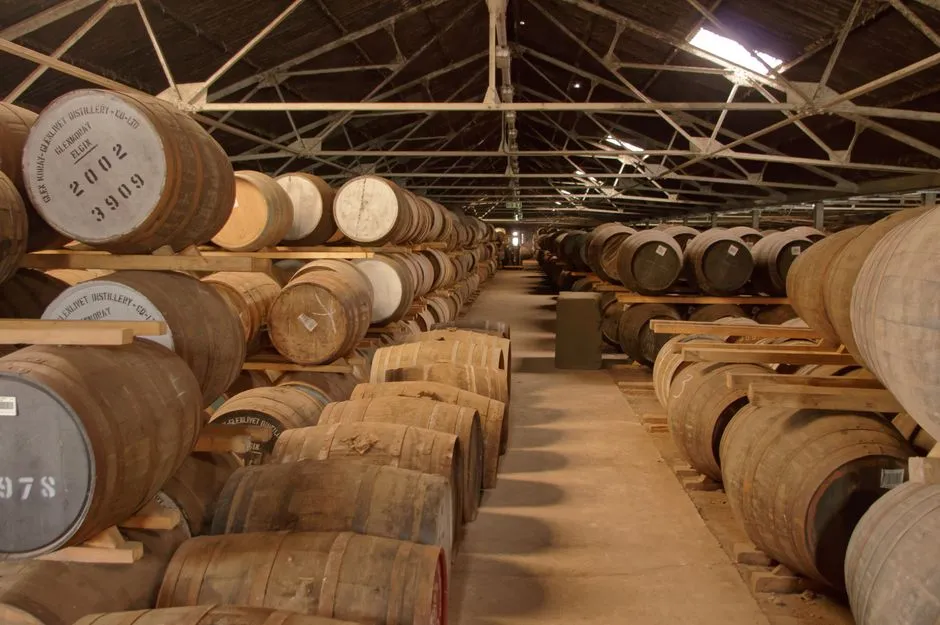
The historical phrase comes from the Bottling-in-Bond Act approved on March 3, 1897. The original statute described bottling spirits from a distillery warehouse under federal supervision, restricted mingling across products and distilling seasons, and allowed proof reduction with pure water under prescribed rules.
The current buying meaning comes from today's regulation, not from treating every operating detail, stamp, or warehouse procedure in the 1897 text as a present label instruction. History explains the vocabulary. Current 27 CFR 5.88 supplies the checklist a modern bottle must meet.
What Bottled in Bond Does Not Guarantee
Bottled in bond does not guarantee:
- one barrel or one production day;
- a single proprietary mash bill beyond the named spirit's applicable type rules;
- a stated age above four years;
- limited production, rarity, or a particular price;
- a flavor profile you will prefer;
- higher quality than every non-bonded whiskey.
Exactly 100 proof can make alcohol and flavor feel more intense than in an 80-proof bottling, but proof is not a quality score. Compare the type, distillery information, age statement if present, and price before deciding whether the bottle answers your actual question.
For adults of legal drinking age. If you drink, use a sober driver or another sober transport plan; the label designation does not change alcohol risk.
Sources
- 27 CFR 5.88, Bottled in bond - current six-part standard, imported-spirit rule, and domestic distillery and plant-number requirements.
- 27 CFR 5.1, Definitions - current distilling-season dates and federal proof definition.
- 27 CFR 5.74, Statements of age, storage, and percentage - age-statement requirements and bottled-in-bond exception.
- 27 CFR 5.143, Whisky - whiskey class and type standards, including straight-whiskey storage and processing rules.
- TTB Whisky Webinar - federal agency summary of domestic bottled-in-bond production and label requirements.
- Bottling-in-Bond Act of March 3, 1897 - primary historical statute used only for the origin and original scope of the phrase.